
Graphic Packaging (Part 1) - Boring Until It Isn't
My previous article balanced on the cutting edge of technology. This one sits on the edge of a cardboard box. On face value, Graphic Packaging Holding Company (NYSE:GPK) isn't glamorous, but then again, neither is the inside of a cereal box. But somebody still had to make it. As the world's largest producer of paperboard packaging, GPK probably did too.
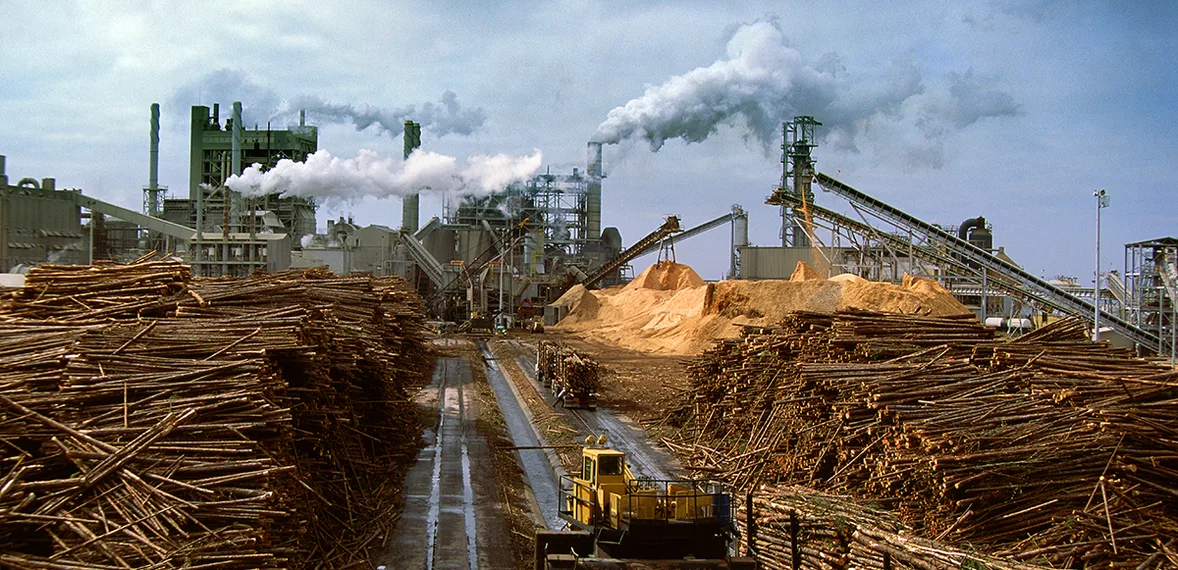
The Business Behind the Box
GPK operates 5 mills in the United States, runs approximately 100 converting plants across 26 countries, and produces every kind of consumer paperboard packaging imaginable. Its customers are the Western consumer economy, names like PepsiCo, Coca-Cola, Nestlé, Procter & Gamble, Kraft Heinz, McDonald's and General Mills, whose products line every aisle of every supermarket.
No single customer accounts for more than 10% of net sales, and the revenue base is broad, diversified, and, above all, non-discretionary. Recessions don't cause people to stop buying breakfast cereal. They may trade down from one brand to another, but GPK still makes the box. The packaging ships regardless.
The numbers bear this out. GPK has been profitable for well over a decade and has generated positive operating cash flow every single year ($841M in the most recent fiscal year). EBITDA margins have held between roughly 15.5% and 19% across the last four years too. That kind of consistency is not accidental but structural, a product of vertical integration from virgin fibre to finished carton, 3,100 patents, and the embedded advantage of serving over 3,000 customers with 23,000 employees on payroll. GPK does the same thing, profitably, year over year; that is precisely the one quality the market would be expected to reward, not punish.
A Statistical Anomaly
And yet the stock languishes at $9.24, down almost 65% in 52 weeks, trading at roughly 6x trailing (GAAP) earnings. Fifteen years of equity appreciation, which amounts to the entirety of the 2009–2024 bull run, have unwound in a mere twelve months. On the surface, it appears as a stock in terminal decline. But a decline and a dislocation are not the same thing.
The tell is in the beta. Graphic Packaging carries a beta of 0.62, which is, by its statistical nature, a stock that moves roughly 60% as much as the broader market. Low-beta boring names do not fall 65 per cent. Not in bull markets, not in bear markets, not in 2008. A drawdown of this magnitude in a business of this character is a dislocation. The pattern of the selling (forced, indiscriminate, accelerating into the final leg below $10) has the hallmarks of capitulation, historically more often associated with a drawdown ending than with the start of one.
It is the behaviour of the people closest to the business, however, that truly gives me pause. Insiders and institutional value investors are accumulating throughout the decline, and the company's own lenders are loosening terms rather than tightening them, which tells me the story is at odds with what the price implies.
A Series of Unfortunate Events
A stock doesn't just collapse 65% because of one bad quarter. It falls 65% because bad news arrives in sequence, and each event compounds the credibility damage of the last, until holding the position feels less like discipline and more like denial. The sequencing is what matters here. A single shock can be absorbed, a cascade cannot, because each new blow lands on the bruise left by the last. What happened to GPK between August 2025 and March 2026 wasn't a correction driven by deteriorating fundamentals, it was a self-reinforcing cycle where genuine operational missteps, governance failures, and mechanical selling pressures collided in a sequence so pulverising that the market lost its ability to price the business rationally.
The chronological timeline speaks for itself:
| Date | Event | Impact |
|---|---|---|
| FY2024–2025 | ~$400M in buybacks at avg ~$25, while Waco overran budget | ~$250M of shareholder value destroyed at today's price |
| Aug 2025 | Q2 earnings: Waco capex guidance raised from $700M to $850M; 2026 FCF target cut | First credibility fracture |
| Oct 6, 2025 | CFO resigns, joins competitor Amcor | C-suite exodus begins |
| Oct 17, 2025 | Raymond James downgrades to Market Perform | First analyst downgrade |
| Nov 4, 2025 | Q3 earnings: EBITDA guidance cut to $1.40–1.45B | Stock falls 5.75% |
| Dec 8, 2025 | CEO departure announced; EBITDA guidance cut again | Stock falls 8.66% the following session |
| Dec 15, 2025 | Eminence Capital (4.2% holder) demands CEO reinstatement | Governance crisis goes public |
| Jan 6–7, 2026 | Wells Fargo downgrades to Underweight; Baird downgrades to Neutral | Analyst pile-on |
| Jan 7 – Mar 16, 2026 | Five law firms announce securities fraud investigations | Headline risk; no lawsuits actually filed |
| Feb 3, 2026 | Q4 earnings miss; FY2026 EBITDA guided $1.05–1.25B | Stock falls 15.97% |
| Feb 17, 2026 | Atlantic Investment exits entire position | Perceived smart-money capitulation |
| Feb 26, 2026 | Credit agreement amended: leverage ceiling raised 4.25x to 5.0x | Read by the market as distress |
| Mar 2, 2026 | 10-K filed: PwC issues adverse opinion on internal controls | Governance shock |
| Mar 26, 2026 | S&P downgrades GPK from BB+ to BB, stable outlook | Two notches from investment grade |
| Mar 2026 | Stock breaches $10 | Sub-$10 mandate selling triggers mechanical liquidation |
Read vertically, the table is a catalogue of events. Read horizontally, it is something else entirely, a credibility destruction cycle. Any individual entry on that list is a setback, fifteen in eight months is a narrative.
The overrun on the Waco mill (a $1.67B greenfield recycled paperboard mill in Texas, the largest capital project in the company's history) was the originating fracture. Management had guided $700M, then $850M, and then finally disclosed that the bill would arrive at an eye-watering $1.67B. That alone the market might have forgiven. But when the CFO departed for a competitor five weeks later, the overrun was retroactively recast as a governance failure rather than a mere estimation error. When the CEO followed in December, it became a pattern. When PwC flagged material weaknesses in internal controls in March, specifically that former senior management had exceeded Board-approved capex limits without authorisation, the pattern hardened into a narrative; this management team cannot be trusted with numbers.
Each new revelation refreshed the entire litany of missteps. An investor reading the PwC adverse opinion in March wasn't only processing a single data-point in isolation; they were re-experiencing the capex overrun, the serial guidance cuts, the C-suite departures, and the fraud investigations simultaneously. This has all the hallmarks of an availability cascade. Once a narrative such as this takes hold, every new piece of information is interpreted through its lens, and disconfirming evidence is quietly discarded. By March, the narrative had solidified; GPK was a company in systemic decline, led by incompetent management, facing possible fraud, and drowning in debt. Truth and consensus had parted ways, and consensus was setting the price.
The Reverse Lollapalooza
So how does a narrative achieve that kind of unanimity? The answer, I think, lies in what Charlie Munger termed the "lollapalooza effect", the observation that cognitive biases rarely operate in isolation, and that when several converge on the same decision, the resulting behaviour is not merely cumulative but explosive. Munger framed it in the context of manias. Yet the same confluence works in reverse too, amplified by loss aversion, the most primal of all biases, which almost guarantees that selling cascades carry more force than buying frenzies.
GPK's decline is a textbook case study of this effect. A confluence of at least half a dozen psychological forces all pushing in the same direction, each feeding the next.
Start with the most visceral. An investor who bought at $30 and watched the stock halve was not reassessing intrinsic value, they were fixated on stopping the bleeding. Every new low compounded the urgency, and Munger's closely related concept of "deprival-superreaction" ensured that each new loss felt worse than the last, not better, even as the stock grew mechanically cheaper. Sooner or later, analysis surrenders to instinct, and the position is closed not because the thesis has changed, but because holding it has become unbearable.
Social proof accelerated the process. When the trade press framed Atlantic Investment's full exit as smart-money capitulation, the headline functioned as a signal to every other fund manager still holding, that somebody knew something and was heading for the door. Short interest rising 80% to 11% of the float, the PUT/CALL ratio surging from 0.08 to 0.77, 148 institutional positions reduced in Q4 2025 alone, 84 closed entirely. Each of those data points reinforced the same message. The consensus analyst rating shifted to "Reduce", with three outright sells against eight holds. Nobody was willing to stand in front of the train, and the absence of willing buyers created a vacuum that the sellers rushed to fill.
The most corrosive bias was arguably the quietest. PwC's adverse opinion on internal controls related specifically to the capex approval process around the Waco mill, a genuine failure, but a bounded one. The market, however, did what Munger's "authority-misinfluence" tendency predicts; it generalised the auditor's verdict into an indictment of every number the company had ever reported. Five plaintiff law firms then announced securities fraud investigations, and the word "fraud" entered the discourse. It hardly mattered that none of those announcements ever became filed claims, and that no securities fraud lawsuit has been brought against the company to date. The headline was sufficient. For many institutional holders, the combination of an adverse audit opinion and the word "fraud" isn't a signal to investigate further, it's an alarm bell to sell fast and ask questions later.
No single bias can explain away a 65% decline in a profitable, BB+ rated business. This is because several cognitive biases operating simultaneously do not simply sum. They produce a combinatorial effect, with each bias amplifying the next, and the resulting distortion being exponential, not linear.
Loss aversion makes social proof more compelling. Social proof makes authority-misinfluence harder to resist. Authority-misinfluence deepens the narrative, and the narrative ensures that every new data point is filtered through the framework of decline. The feedback cycle is self-reinforcing, and it runs until its fuel (willing sellers above the clearing price) is exhausted. In the final leg down, sub-$10 mandate selling triggered forced liquidation by institutional holders whose charters prohibit single-digit equity positions, creating a last wave of price-insensitive selling that had nothing whatsoever to do with business fundamentals.
Somewhere amidst the crescendo of this cascade, a $1.67B paperboard mill behemoth in Waco, Texas quietly stirred into life. It will produce paperboard for the next three decades, regardless of what the share price does tomorrow. The market has priced the cost; it has yet to price the asset. That asymmetry, a product of the market's vicissitudes, not any deficiency in the underlying business, is where the story becomes interesting.
The Asset Behind the Cost
The Waco mill isn't an abstraction. It's a $1.67B greenfield recycled paperboard facility in central Texas, and the single largest capital project in Graphic Packaging's history. In fact, it's already rolling paperboard, with commercial production having begun in October 2025.
What the market remembers, however, is not the output but the cost. The bill, when it finally crystallised, bore little resemblance to the estimate. $1.67B against an original budget of approximately $1.1B, swollen by roughly $80M in capitalised interest and by failures of oversight that went well beyond estimation error. PwC would later formalise it as a material weakness, former senior management exceeding board-approved capex limits without authorisation, a transgression that cost the CEO and CFO their positions and cost the company its credibility. The executives who approved the spend without authorisation are gone, but the $1.67 billion fait accompli they left behind doesn't care who signed the purchase orders. It's up and running, and the market hasn't yet reckoned with what that entails.
And it's got off to a good start as well. The Waco machine is nearly identical to the K2 line at GPK's Kalamazoo facility, and the start-up was managed by the same team that brought K2 online in 2022. That operational continuity showed in the numbers too. Management had originally budgeted approximately $60M in start-up costs, whereas the actual figure came in at $40M. The interim CFO Chuck Lischer confirmed on the Q4 2025 earnings call that start-up costs in 2026 would be zero. The ramp was, in his words, "really strong". New CEO Robbert Rietbroek now pairs the two facilities together as "the highest quality and most efficient recycled paperboard manufacturing facilities in North America". So that's two mills, purpose-built for recycled board, operating at cost levels that no competitor in the grade can match.
To put a positive spin on the overshoot, it's self-reinforcing in a counterintuitive way. The higher the construction bill, the less likely it is for anybody to try replicating it. If a competitor wanted to match Waco's capacity, they'd have to spend at least $1.67B, not $1.1B, to do so. Granted, the cost overrun was a governance failure, but it also raised the barrier to entry for the entire grade. And the operating economics of the mill, the cost per ton, the output, the efficiency, are identical regardless of whether the construction bill was $1.1B or $1.67B. In other words, sunk cost is irrelevant to the asset's competitive position; it only makes that position harder to challenge.
Waco's output has already displaced two higher-cost mills, Middletown, Ohio (closed May 2025) and East Angus, Quebec (closed December 2025). The closures weren't merely reactive; they were the entire reason behind building Waco in the first place. So now that GPK has replaced ageing, less efficient production with a single state-of-the-art operation, it's consolidated its position as the lowest-cost producer in coated recycled board, a grade where it now commands roughly 50% market share. That position earns its weight when the cycle turns. When demand softens, the highest-cost mills will be first to close doors. GPK is almost guaranteed to be the last mill standing in any such scenario, likely surviving any downturn and emerging with a larger share of whatever remains.
The Capex Normalisation
With the Waco mill up and running, the spending has ended, and what follows is a straightforward mechanical shift. The roughly $470M in annual capital expenditure gets wiped from the cash flow statement, not because the underlying business has improved, but because the construction project is over. That nuance would have escaped anyone pricing GPK off trailing numbers alone. For two years now, the financial statements have been painting GPK as a company consuming more cash than it produces, and the market, unsurprisingly, has taken those numbers at face value. What the trailing figures don't show is that the cash drain was temporary, and it has just ceased.
| Year | Operating Cash Flow | Capital Expenditure | Free Cash Flow |
|---|---|---|---|
| FY2024 | $840M | $1,203M | ($363M) |
| FY2025 | $841M | $922M | ($81M) |
| FY2026 (guided) | ~$850M | ~$450M | $391M+ |
The pattern is plain from the table above. Operating cash flow never wavered, $840M and $841M in back-to-back years, but it was capex that consumed everything coming through the door and then some. In FY2024, the Waco build alone swallowed more cash than the entire business generated. That's roughly $1 of every $9 in revenue going straight into a construction site in Texas; the sole reason trailing free cash flow had been negative. Simply strip out the construction spend, and it's obvious the underlying business was generating cash the entire time.
Lastly, what makes the FY2026 guided figure of $450M different from a typical projection is that it requires no execution. The spend simply stops because the Waco mill is physically complete. That makes it easy to take CEO Rietbroek at his word, when he reaffirms that capex will stay at or below 5% of sales, based solely on the observation that there's nothing left to construct.
The FCF Inflection
GPK generated positive free cash flow for years before Waco broke the pattern:
| Year | Free Cash Flow |
|---|---|
| FY2021 | ($193M) |
| FY2022 | $541M |
| FY2023 | $340M |
| FY2024 | ($363M) |
| FY2025 | ($81M) |
The two negative years, FY2024 and FY2025, are entirely attributable to the Waco capital programme. Strip out the construction spend and free cash flow never went negative. The business never stopped generating cash; the cash was simply redirected into a project that now no longer exists.
So what does a normalised picture look like? The arithmetic is straightforward:
| Amount | |
|---|---|
| Operating cash flow (FY2025) | $841M |
| Less: guided capex (FY2026) | ($450M) |
| Normalised free cash flow | $391M |
And that $391M figure is the starting point, the base case in which capex simply stops and nothing else changes. Former CEO Michael Doss guided $160M of total incremental EBITDA from Waco, decomposing it into roughly $100M of fixed-cost savings and roughly $60M from incremental volume. The $100M is pure cost displacement: Waco now produces what the older Middletown and East Angus mills used to, at a lower cost per ton, and that portion requires no volume growth whatsoever. The $60M depends on a demand recovery through 2027–28 that isn't yet visible in the data. Layer the $100M cost-displacement tranche onto the $391M base case, and normalised FCF rises to roughly $491M.
It's worth stacking the two cases side by side, because they answer different questions:
| Capex normalisation only | + Waco cost displacement | |
|---|---|---|
| Normalised FCF | $391M | ~$491M |
| Market capitalisation | $2.73B | $2.73B |
| FCF yield | 14.3% | 18.0% |
| Price / FCF | ~7.0x | ~5.6x |
At $9.24, the stock trades on roughly 7x free cash flow if Waco does nothing more than stop bleeding capex, and on roughly 5.6x once you give it credit for the cost-displacement piece of its EBITDA target. The first column requires no execution at all. The second only requires the older mills' production to come out at lower cost from the new mill, which is precisely what Waco was built to do.
Management's own FY2026 FCF guidance is around $700–800M, which at first glance makes even the 18.0% yield look conservative. I'd argue it isn't. That headline figure includes several one-time tailwinds, such as a ~$260M cash benefit from a planned inventory reduction, lower cash taxes from 2025 legislation, and zero cash outflow on incentive compensation (the cash component is deferred to FY2027). These are real dollars that will show up in the fiscal year, but are non-recurring, so I'd prefer to discount them entirely.
The sustainable run-rate, stripped of those one-timers, sits closer to $400–500M, and it climbs from there as Waco's contribution matures. Even at the conservative end of that range, GPK is generating roughly 15% of its own market cap in free cash flow every year. That is the number the market has yet to price, because the market is doing something that Daniel Kahneman would recognise instantly: substituting the hard question "what will this business earn going forward?" with the easier question "what has this business earned recently?". Trailing FCF is negative, capex overrun is fresh, governance failures are vivid and re-ratings still raw. So the stock sits at $9.24, somewhere between 5.6x and 7x, a normalised cash flow figure that hasn't yet appeared in a quarterly filing. The first quarter of normalised capital spending will be Q1 FY2026, reported on May 5th. That's when the inflection moves from thesis to fact.
What makes this inflection different from most is that it asks almost nothing of the business. The roughly $470M annual reduction in capital expenditure flows directly to free cash flow. It doesn't require a recovery in demand. It doesn't require new customer wins. It doesn't even require the volume-dependent half of Waco's EBITDA target to materialise. It requires only that the company stop building the mill it has already finished building. The market has priced the trailing cost of a once-in-a-generation capital programme; it hasn't yet priced the forward cash generation of the asset that programme created.
What $9.24 Actually Buys
The cash flow, compelling as it is, is just one lens on the business. The balance sheet lands in the same place.
Adding up GPK's property, plant, and equipment (five U.S. mills, over 100 converting plants spanning 26 countries, including the brand-new Waco facility), the company carries a replacement cost that dwarfs the $2.73B equity market capitalisation. The stock trades at 0.82x price-to-book, valuing the entire company below its own accounting equity and discounting the customer relationships with PepsiCo, Coca-Cola, Nestlé and the rest of the consumer-staples roster, the 3,100 patents, the vertical integration, the switching costs of a supplier physically embedded in its customers' production lines.
A note on the P/B figure. Roughly $2.7B of the ~$3.3B book value is goodwill and intangibles from prior acquisitions; tangible equity is only ~$600M, putting price-to-tangible-book (TBV) closer to 4.5x. The sub-1x P/B does not mean the physical assets come free. It means the market has marked the acquired franchise down to less than what was paid to assemble it.
GPK's position in each grade points the same way. In coated unbleached kraft (CUK), the market is effectively a duopoly, with GPK at roughly 60% and Smurfit WestRock at roughly 40%, and no new capacity announced anywhere in the grade. Smurfit WestRock, post-merger, is de-emphasising folding carton and consumer packaging in favour of corrugated, making it a less aggressive competitor in GPK's core markets. The duopoly structure remains intact.
The same pattern holds in coated recycled board (CRB). GPK holds approximately 50% share, and Waco adds a net 200,000 additional tons after accounting for the East Angus and Middletown closures, making it the only significant new CRB capacity in North America. The grade is consolidating around the lowest-cost producer, not fragmenting away from it.
That leaves solid bleached sulfate (SBS), where the overcapacity concern is more than rhetorical; the historical SBS-over-CRB premium has collapsed, dragging pricing down across both grades. But the competitive picture from here is more favourable than analysts are forecasting, as GPK is structurally less exposed to the pressure than its peers in any case. Sappi's 520k-ton Somerset machine has ramped slower than projected, and Clearwater Paper, now acquired by Billerud, is juggling two integrations simultaneously and is unlikely to be overly competitive near-term. More importantly, after divesting Augusta, GPK holds only roughly 11% of the SBS market, and over 95% of its remaining SBS capacity is consumed by its own converting plants rather than sold into the merchant market. In any scenario where SBS prices continue to fall, GPK sits on the buying side of that pressure, not the selling side.
Then there are tariffs, which cut in GPK's favour. The current US tariff regime imposes a 10 to 15% surcharge on imported packaging, and the effect on SBS is direct, with roughly 500,000 to 600,000 tons entering the United States annually from European mills (approximately 10% of domestic supply), and that volume is now 20 to 30% more expensive at the border. European imports had already fallen roughly 10% through 2025, even before the latest surcharges took effect.
GPK sits on the favourable side of the regime. Approximately 70% of its manufacturing base is domestic, its fibre is domestically sourced, and the vertical integration from mill to carton means the tariff falls on its competitors, not on its own cost structure. Its European operations are locally integrated, buying European board and selling to European customers, so the cross-border exposure is minimal. In the one grade where overcapacity posed a genuine threat to GPK's pricing, the tariff regime has made the marginal competitor meaningfully more expensive.
Take the grades together, add the tariff tailwind, and the same conclusion lands across all of them. GPK is the dominant player in CUK and CRB, structurally insulated from the SBS overhang, and now the beneficiary of a trade regime that no sell-side model has incorporated. The market is pricing this business as though it were the most vulnerable participant in a deteriorating industry. What the buyer at $9.24 actually receives is the inverse, a dominant franchise in a consolidated market, trading below its own book value and generating cash the market hasn't yet counted.
Where the Cash Goes
A normalised free cash flow figure on its own does very little for the equity. The number that matters is what management is permitted to do with it, and on that question the answer is remarkably narrow. The same February 26th credit amendment that the market read as a distress signal also imposed the binding constraint on capital allocation. The leverage ceiling raised from 4.25x to 5.0x got the headlines. The buyback cap of $65M per year through September 2027 did not, and yet it is the more consequential half of the document. Against the $150M GPK actually spent on repurchases in FY2025, and against a $1.715B authorisation that now sits effectively frozen, that cap forecloses the optionality the equity holders had been hoping for. Whatever the company generates above dividends and a token buyback now belongs, by contractual operation, to the lenders.
That posture is striking, and worth pausing on. The market read the amendment as the lenders bracing for trouble; in fact they were doing the opposite, using their contractual priority to insist that the next eighteen months of cash flow be applied to the balance sheet, which is precisely what a rational equity holder would have asked for if the decision had been theirs to make. The bondholders, in other words, are doing the equity holders' work for them.
The arithmetic from there is almost purely mechanical. Management's normalised FY2026 EBITDA guidance, stripping out the temporary impact of a deliberate inventory drawdown, sits between $1.2B and $1.4B. I'm using the lower end of that range, $1.2B, which assumes no volume recovery and no benefit from the demand-dependent half of Waco's EBITDA target. CEO Rietbroek has guided $500M of debt paydown in FY2026; I assume the same pace continues into FY2027.
A note on the two leverage figures. GPK's net leverage is quoted two ways: 3.8x in the press release (against headline Adjusted EBITDA of $1.395B) and 3.63x in the 10-K (against a bank-defined EBITDA of ~$1.469B that includes a few add-backs the credit agreement permits). Both are real, and the 3.63x is what the lenders monitor for compliance. I'm using the 3.8x throughout the scenarios below to stay on the most conservative side.
The path from here writes itself:
| Net Debt | Adj. EBITDA | Leverage | |
|---|---|---|---|
| End FY2025 (actual) | ~$5.31B | $1.395B | 3.80x |
| End FY2026 (assumed) | ~$4.81B | $1.2B | ~4.01x |
| End FY2027 (assumed) | ~$4.31B | $1.2B | ~3.59x |
On a conservative $1.2B base, leverage does not cross 3.0x within two years. It reaches roughly 3.6x by the end of FY2027 and, at the same pace of paydown, would approach 3.0x by late FY2028. That timeline is roughly a year longer than it would be at $1.395B, and it is the more honest one to plan around. 3.0x is the level that matters. It is the threshold at which BB-rated packaging peers have historically stopped trading as distressed credits on 6x EV/EBITDA and resumed trading as ordinary cyclicals on 8 to 9x. The re-rating itself is a separate event that may or may not arrive on schedule, but the deleveraging that unlocks it does not depend on the market cooperating.
What makes this engine distinctive is the arithmetic of the transfer. At a constant enterprise value, every dollar of net debt retired lands directly on the equity line. A billion dollars of debt paydown, divided across the 296M basic shares outstanding, is $3.38 per share of equity value created without anything else happening. The two-year path above retires roughly $1B of debt, approximately $3.38 per share, over a third of the current $9.24 quote, before a single multiple point of re-rating is assumed. If EBITDA recovers toward the upper end of the normalised range ($1.4B), or if Waco's cost displacement adds the guided $80 to 120M from here, the timeline compresses accordingly. The conservative case is not the only case; it's simply the one I'd rather underestimate than overestimate.
A corroboration sits one rung up the capital stack. GPK's senior notes traded at roughly 99% of par at year-end 2025, with the $3.87B fixed-rate book at 98.7% and the $1.57B variable-rate book at 99.7%. The equity, over the same window, was down 65%.
A caveat is warranted here - bonds price solvency, not earnings power, and the two markets can rationally diverge without either being wrong. Bondholders get paid in full in any scenario short of default; equity holders absorb every dollar of EBITDA uncertainty in between. But what the bond market is saying is still informative; default risk is negligible, and the lenders with first claim on the cash flows do not see a business in danger of failing to service its debt. The question for the equity is not whether GPK can survive the deleveraging, but where normalised EBITDA settles on the other side of it.
There is also a second-stage catalyst dormant behind the same lender lock. The outstanding $1.715B buyback authorisation has not been withdrawn, only capped at $65M per year through September 2027, and against today's $2.73B market capitalisation the unused portion is roughly 63% of the equity. That was the posture management had telegraphed before the amendment landed; then-CFO Stephen Scherger had told the Q2 2025 call that, "you should expect to see us apply the vast majority of our free cash flow to share repurchase", a disposition the lenders then overrode without revoking. The same two-year window that clears leverage below 3.0x also runs out the contractual cap on the authorisation; once both fall away, the buyback does not need to be re-authorised, only unlocked. The equity holders have been asked to wait their turn behind the lenders, not to give up their place in the queue.
The broader point is that the deleveraging engine doesn't ask for blind faith. It requires no volume recovery, no narrative repair, no activist victory, no buyback resumption, not even a particularly cooperative macro. It requires only that GPK stay solvent and keep writing cheques to its lenders on a schedule that its own credit agreement now compels. Every quarter of ordinary cash generation mechanically shrinks the debt and mechanically lifts the equity, whether or not anyone is paying attention to either. In a market that almost always asks investors to be right about something unknowable, a catalyst that operates purely on the arithmetic of solvency is a rare thing to find discounted.
Who the Sellers Sold To
Don't just take my word for it though. Every seller needs a buyer, and during GPK's 65% decline the shares passed from institutions rebalancing mechanically into the hands of investors who were sizing positions deliberately. The distinction matters; the sellers were reacting to price, whereas the buyers were reacting to value.
None of that is visible in the headline ownership data. On its face it looks damning. 148 institutional positions reduced in Q4 2025, 84 closed entirely, and the shareholder base turned over at a pace that, in isolation, would seem to confirm the narrative of a business in terminal decline.
The 13F data itself overstates the picture; reported institutional shares (337.5M) actually exceed shares outstanding (295.7M), a phantom created by share lending, where both the lender and the short-seller's buyer report the same share. Short interest of 35.39M shares accounts for most of the discrepancy. The trouble is that the headline count treats every position as equal. A $12M passive rebalance is logged as one entry in the table, a $150M buy by a fundamental holder is logged as another, and the two carry the same weight in the aggregate. The number measures activity, not conviction. Weight the positions by dollars, separate the mechanical flows from the deliberate ones, and the picture inverts entirely.
The Sellers
The sellers were, almost without exception, price-takers rather than price-setters. Fidelity trimmed its aggregate GPK exposure by roughly 30%, BlackRock by roughly 16%, and a long tail of smaller generalist funds unwound positions in step with the stock breaching internal risk thresholds and stop-loss levels that had nothing to do with the business and everything to do with the chart. Even Atlantic Investment Management's full exit, which the trade press wrote up at the time as a smart-money signal, fits inside the same bucket; $12.6M liquidated by a $178M fund already deep in its own multi-year drawdown, executed alongside four other complete exits that quarter and accompanied by no public commentary, a portfolio rotation rather than a thesis verdict. When an index constituent drops out of a factor screen, or when it breaches the single-digit handle that institutional charters forbid holding, nobody stops to pick over the 10-K again; the position is sold because the rules require it. Mechanical selling, in other words, reveals nothing about intrinsic value; it only reveals the terms of the mandate.
By early 2026, the marginal seller of GPK was almost never the marginal analyst. Price was being set by holders who had formed no view on the business, only on the chart. And every share those holders offloaded had to be absorbed by somebody willing to stand on the other side at the prevailing quote. Those buyers on the other side were not, on closer inspection of the same 13F data, the kind of capital that follows charts.
The Buyers
Which raises the question the market never quite got round to asking, who exactly was buying? It wasn't generalists drifting in off a screen. They were a small set of investors whose entire process is built around the moments when mechanical capital is forced to sell into thin liquidity.
| Investor | Action | Size |
|---|---|---|
| Einhorn / Greenlight Capital | +78.8% (+3.71M shares) in Q4 2025 | $126.7M, largest dollar add to an existing position that quarter |
| Eminence Capital | +164.6% in Q3 2025, then fought a proxy battle for CEO reinstatement | $149.7M, 2.59% of GPK |
| Fuller & Thaler | +43.1% (+5.4M shares) in Q2 2025, then held through the cascade | $281.7M, 6.32% of GPK |
| CEO Robbert Rietbroek | Open-market purchase, March 2026 | $501K at $11.32 |
David Einhorn's Greenlight Capital added 3.71 million shares to an existing GPK position in Q4, bringing the holding to $126.7M and roughly 4.5% of the fund. In dollar terms, it was the largest add to any existing position in Greenlight's book that quarter. He had been long GPK before the slide began in earnest too. He watched the Waco overrun, the CFO departure, the analyst downgrades, the CEO exit, and the PwC adverse opinion, and at each of those off-ramps, his response was to buy more, not less. His Q4 2025 letter only hinted that GPK would "likely recover in due course", but it's the size of the trade that's doing the heavy lifting. Nobody nearly doubles a losing position in a name they think is broken. And nobody tells their own limited partners to expect a recovery unless they actually expect one. Einhorn has done both.
Eminence Capital escalated further still. Having added 164.6% to its position in Q3 to reach $149.7M, or 2.59% of the company, Ricky Sandler's firm then launched a public proxy battle in December 2025 demanding the reinstatement of the departing CEO. Activism of that order is expensive in reputation, legal fees, and management time, and it only makes sense when the gap between price and value is wide enough to justify the spend. By choosing confrontation over liquidation, Eminence was implicitly telling the market that they think GPK is several multiples of the current price.
A quieter version of the same conviction sits with Fuller & Thaler Asset Management, the behavioural finance shop co-founded by Richard Thaler, who hold 6.32% of GPK at an average cost in the high teens. They sized up to that level in Q2 2025, before the cascade had really begun, and then held the position untouched as the entire Q3-Q4 decline engulfed them. Earlier I argued that what was dragging GPK to $9.24 was the substitution heuristic Kahneman and Thaler spent their careers documenting; the Q2 add itself wasn't a clean behavioural arbitrage on that error, since it hadn't fully kicked in yet, but the refusal to capitulate as it then took the stock 65% lower is at least the next-best thing. The shop built around exploiting this exact cognitive error did not flinch when it was observable live in the data.
The last buyer is the one who joined the company itself. Robbert Rietbroek took the chief executive seat on the 1st January 2026, arriving from Primo Brands, with earlier positions at PepsiCo's Quaker Foods, Kimberly-Clark, and Procter & Gamble. For transparency, it should be disclosed that Eminence Capital's (December 22nd 2025) open letter provides strong allegations of poor tenure performance. At Quaker, volumes declined rather than grew over his five-year tenure; at Primo Brands, the stock fell more than 50% on his watch, drew class-action filings, and he was fired rather than recruited away. Eminence has its own axe to grind (a proxy fight to reinstate Doss), but the failings are hard to ignore; a board asked to repair a value-destruction story has installed a CEO whose only prior public seat produced one of the same shape. Against that, the $501,000 he put down at $11.32 in March 2026, ten weeks into the role, is a real signal but a discounted one. The buying suggests he holds some mild conviction, but it's hard to argue based on the evidence, that he's the right person to deliver on it.
The character of these trades deserves dwelling on, because opening a new position and adding to (or refusing to retreat from) a losing one are not the same disposition. A fresh entry costs the manager nothing in narrative; there is no investor letter to write, no "why are you still in this name?" conversation to have, no career risk to absorb. Sizing up aggressively into a position that has already turned against you is the opposite move; it commits the manager twice, once to the original thesis, and once again to the claim that the thesis has only strengthened on the way down. Loss aversion makes that hard. Institutional incentives make it harder still, since the path of least resistance is always to trim the loser, manage the tracking error, and move on. The fund managers above did the opposite, repeatedly and at scale, which is about the highest-conviction signal that 13F flow data is capable of producing.
Cost basis sharpens the asymmetry further. Every one of the named buyers accumulated their shares well above the current quote: Fuller & Thaler at an average cost in the high teens, Eminence in the low-to-mid $20s during Q3 2025, Einhorn between $15 and $22 through Q4, Rietbroek at $11.32 in March 2026. None of them got in below $9.24, and every one is sitting on a paper loss on the same evidence and the same thesis that the next buyer inherits intact. A buyer at the current price is, by definition, entering beneath the cost basis of every fundamental holder in the name. There's no premium to pay for siding with them, only a discount on the same trade, and with the same catalysts still ahead. The same shares that one cohort of holders had to sell are now sitting in the hands of a cohort that chose to buy, and the distance between those two dispositions is, in the end, the distance between price and value.
What Could Still Go Wrong
I'd rather find the holes in this thesis myself than have the market find them for me. What follows is the steelmanned bear case, not the lazy version, but the sharpest one I can construct from the same data. What follows are the risks I deem to be the most material, with the caveat that I can't claim this list to be exhaustive either.
The Refinancing Wall
The deleveraging story is clean in aggregate: cash comes in, debt goes out, equity value rises. But the maturity profile underneath is less cooperative. Of GPK's $5.6B in total debt, roughly $4.4B comes due by the end of 2029, and the concentration is heavily back-loaded:
| Year | Maturing ($M) |
|---|---|
| 2026 | $525 |
| 2027 | $338 |
| 2028 | $1,162 |
| 2029 | $2,409 |
| 2030+ | $1,000 |
The 2028 and 2029 vintages together total $3.57B, more than the company's entire equity market capitalisation. The volume is one problem; the repricing is the harder one. Roughly $2.5B of that debt was locked in when rates were near their floor, at coupons below 4%. When those notes mature, they'll be refinanced at whatever the market is charging at the time, likely 5 to 7%. If the blended rate on that $2.5B moves from roughly 3% to roughly 6%, GPK's annual interest bill rises by $50 to 75M, a direct offset against the free cash flow improvement that the capex normalisation delivers.
The nearest maturity has already been addressed, but only by borrowing again. The $400M in 1.512% notes due April 2026 are being repaid with a new term loan that itself matures in June 2027, roughly fourteen months later. It buys time; it doesn't resolve anything.
Today, none of this looks like a crisis. GPK's debt traded at 99% of par as of year-end 2025, even after the equity had fallen 65%, which is the bond market's way of saying it sees no near-term distress. But credit conditions aren't guaranteed to hold. The wall arrives while the company is still carrying elevated leverage (3.8x net, 4.6x by S&P's adjusted measure) and breaking in a new management team. If borrowing costs rise meaningfully between now and the 2028 to 2029 window, the refinancing gets more expensive, the interest drag on free cash flow grows, and the deleveraging timeline stretches further than my base case assumes.
Two Notches From Investment Grade
S&P downgraded GPK from BB+ to BB on March 26th, with a stable outlook. The immediate effect is modest, but the implication is not. GPK is now two notches from investment grade rather than one, and its stated ambition of reaching BBB- by 2030 just got harder.
The more subtle problem is that S&P and GPK don't measure leverage the same way. GPK reports 3.8x; S&P's own calculation, which treats operating leases and the receivables factoring programme as forms of debt, arrives at 4.6x. That gap matters because it means GPK can be paying down debt and still not see the improvement reflected in its rating. The goalposts, as far as S&P is concerned, are further away than the company's own numbers suggest.
Moody's remains at Ba1, stable, and the two agencies disagreeing is tolerable. Both downgrading in tandem is not. If Moody's follows S&P, the practical consequence falls directly on the 2028 to 2029 refinancing window: a lower rating shrinks the pool of willing lenders, widens the premium GPK pays to borrow, and compounds the interest cost problem already embedded in the maturity schedule. Whether Moody's moves depends in part on whether the next two quarters show EBITDA stabilising or still declining. The Q1 FY2026 report on May 5th will be the first indication either way.
The Off-Balance-Sheet Lever
Rather than waiting 30 to 60 days for its customers to pay their invoices, GPK sells those receivables to third-party financial institutions and collects the cash upfront. In FY2025, the company cycled $4.74B through these arrangements, roughly 55% of annual revenue, with about $800M outstanding at any given time. It's a common practice in packaging, and GPK has been doing it for years.
Two things stand out. First, it isn't free. GPK paid $57M in fees on that ~$800M average balance, an effective annual cost of roughly 7.1%. Those fees don't show up as interest expense; they sit within operating costs, and the cash received flows through the operating line rather than the financing line. The practical effect is that GPK's reported operating cash flow looks stronger than it would if the company simply waited for its customers to pay and borrowed against the gap conventionally. That said, the programme has been running at similar scale for years; the outstanding balance grew by only $36M between FY2024 and FY2025 ($778M to $814M), so the incremental flattery to any single year's OCF is modest, not the full $800M headline figure.
Second, and more importantly, the arrangement depends on the willingness of the counterparties to keep buying. If GPK's credit profile deteriorates further, whether through another downgrade, a missed earnings target, or a broader credit crunch, those counterparties have no obligation to renew. If the programme unwound, roughly $800M of receivables would return to the balance sheet. Against $1,050M of available revolver capacity, that single event would consume most of GPK's remaining liquidity.
I consider this unlikely. The programme has continued uninterrupted through the entire cascade of downgrades, executive departures, and earnings misses. But the exposure is large, roughly 30% of the current equity market cap, and it deserves acknowledgement in any honest reading of the balance sheet.
The Governance Overhang
PwC's adverse opinion on internal controls over financial reporting, disclosed in the March 2026 10-K, is the most visible piece of unfinished business hanging over the equity. The finding was specific: former senior management exceeded Board-approved capital expenditure limits on the Waco mill without authorisation. The executives responsible have since departed, the new CEO and interim CFO are in place, and the Waco mill is physically complete. But the adverse opinion itself has not been remediated.
No remediation timeline has been disclosed. Management did not discuss the topic on the Q4 2025 earnings call. The earliest an unqualified opinion could realistically appear is the FY2026 10-K, expected around March 2027, which means the governance overhang persists for at least another year. The Q1 2026 10-Q, due in May, will be the first filing required to include a remediation progress update under Item 4, and it will be watched closely.
In practical terms, the material weakness does not impair GPK's ability to generate or deploy cash. It does, however, keep a scarlet letter on the filings that institutional governance screens will flag automatically. For any fund whose compliance process treats an adverse ICFR opinion as a hard exclusion, GPK remains uninvestable until the remediation is complete, regardless of the underlying economics. That mechanically constrains the buyer pool and places a soft ceiling on how far the stock can re-rate before the issue is resolved.
The Capex-Depreciation Gap
A reasonable objection to the FCF figures used throughout this piece is that $450M in total capex looks low for a company with $536M in annual depreciation and amortisation. The rule of thumb that maintenance capex should approximate D&A is sound over a long horizon, but it misleads here. GPK's D&A is inflated by accelerated depreciation from the Middletown and East Angus closures, and by the accounting charge on the brand-new Waco mill, which will depreciate over decades but requires near-zero maintenance in its early years.
Furthermore, management's own guided D&A for FY2026 is $500 to 520M (per the March 2026 investor presentation, excluding accelerated depreciation from closures and purchased intangible amortisation), not the $536M reported in FY2025. The gap between $450M of total capex and $510M of normalised D&A is roughly $60M, not the $86M that a naive comparison to FY2025 D&A suggests. And the $450M is not purely maintenance; it includes growth, productivity, and sustainability projects alongside routine upkeep. This is not a company deferring maintenance to flatter its cash flow; it is a company that has just comprehensively renewed its asset base and, for the duration of the thesis timeframe, can credibly spend below D&A.
The Earnings Power Question
Management guided FY2026 Adjusted EBITDA at $1.05 to 1.25B on a reported basis. That headline figure looks alarming against FY2025's $1.395B, but it requires context. The company is deliberately drawing down approximately 200,000 tons of excess inventory by running its mills below capacity, an action that depresses reported EBITDA but generates roughly $260M of cash through working capital release. Strip out the production curtailment impact and management's own normalised guidance is $1.2 to 1.4B, which is the range I've used for the base case above.
The base case takes the lower end of that normalised range, $1.2B, but even that figure is not guaranteed. It includes approximately $100M of restored incentive compensation (effectively zero in FY2025 due to missed targets), which is a real cost returning after a two-year holiday. It also assumes that soft CPG volumes and SBS pricing pressure, which together dragged EBITDA margins from 20.1% to 16.6% over the last two years, do not deteriorate further. Both assumptions are reasonable but neither is certain.
The risk is straightforward. If normalised EBITDA settles below $1.2B, say at $1.1B because volumes don't stabilise or pricing pressure persists, leverage at end of FY2027 would sit at roughly 3.9x ($4.31B / $1.1B) rather than 3.6x, and the 3.0x re-rating threshold recedes from late 2028 into 2029 or beyond. The thesis doesn't break, but it stretches, and every additional year of waiting is a year in which something else can go wrong. The historical base rate for packaging demand, people do not stop buying food in boxes, suggests the current softness is cyclical rather than structural. But base rates are not guarantees, and the next two quarters of reported results will carry more weight than any assumption I can make from the outside.
The Litigation Overhang
Five law firms, Schall, Howard G. Smith, Glancy Prongay & Murray, Pomerantz, and Portnoy, are investigating potential securities fraud claims. All remain in the lead-plaintiff recruitment stage; no complaint has been filed on PACER. Pomerantz has expanded the proposed class period to include the Q4 2025 earnings drop, and Portnoy, the most recent, is also investigating board fiduciary duty breaches. Even without merit, a filed complaint would create discovery costs, management distraction, and D&O insurance exposure at precisely the moment the new leadership team needs to be focused on execution.
The Union Pension Unknown
GPK's workforce is 59% unionised, and the company has just closed two mills, Middletown and East Angus. Facility closures can trigger partial withdrawal assessments from multiemployer pension funds, and those assessments are notoriously difficult to predict. The balance sheet carries $15M in recorded multiemployer pension withdrawal liability, but the contingent exposure could be materially larger. This is the kind of risk that probably amounts to nothing, but if it surfaces, it surfaces at the worst possible time.
Tariffs Cut Both Ways
The tariff paragraph earlier in this piece describes how imported SBS has become 20 to 30% more expensive, which benefits GPK domestically. What it doesn't mention is that Canada imposed retaliatory tariffs of 25% on US paper packaging exports. GPK operates converting plants in Cobourg and Mississauga that mitigate this, but the retaliation is a reminder that trade regimes giveth and taketh in the same motion.
The Iran War and Energy Costs
The Strait of Hormuz crisis has hit packaging stocks broadly; Morningstar names the sector among the hardest hit, and Jefferies reports a collective 14% decline since the conflict began. The headlines, however, conflate a sector that is not one thing. The damage concentrates in plastics and metals, where petrochemical feedstock costs have surged alongside oil, and in international supply chains running through the strait. GPK sits on the opposite side of both; fibre not plastic, roughly 70% domestic manufacturing, vertically integrated from domestically sourced fibre to finished carton.
The genuine risk is energy. Natural gas feeds GPK's mill operations, and whilst long-term supply contracts include price adjustment mechanisms, those adjustments lag by approximately six months. Rapid cost escalation compresses margins before the passthrough catches up. If the conflict sustains elevated inflation into 2027 and 2028, it also widens the spread GPK will pay on the $3.57B refinancing wall, pushing the $50 to 75M annual interest cost headwind described earlier higher still.
The offsetting factor is that the same dynamic that hurts GPK's energy bill helps its competitive position. Rising petrochemical costs make plastic packaging more expensive relative to fibre, accelerating a substitution trend that EU and US regulators are already mandating through recycled-content targets and extended producer responsibility fees. And European SBS imports, already 20 to 30% more expensive from tariffs, now face additional freight costs that further insulate GPK's domestic pricing. The war is a net headwind for the packaging sector; it is a more equivocal proposition for the segment GPK occupies within it.
Weighing the Whole
Taken together, these risks share a common feature; they are bounded and quantifiable. The refinancing wall is large but arrives against a business generating $800M+ in annual operating cash flow. The S&P downgrade is a setback, not a spiral, and Moody's has yet to follow. The receivables factoring tail risk is genuine but low probability, and it has survived the worst eight months in the company's history without so much as a hiccup. The material weakness is a stain on the filings, not on the operations. The litigation has produced headlines but no lawsuits.
The most consequential risk is the simplest; that the normalised earnings power of the business sits below the $1.2B I've used as the base case. Everything else, the refinancing wall, the rating agencies, the factoring programme, is manageable at $1.2B and uncomfortable at $1.1B. The gap between those two numbers is where the thesis lives or dies, and the next two quarters of reported results will do more to resolve it than any amount of analysis from the outside.
That said, I would be dishonest to claim certainty. If EBITDA disappoints on the doorstep of the 2028 to 2029 refinancing window, and credit spreads widen simultaneously, and the factoring programme tightens, the combination would be genuinely painful. The probability of all three arriving at once is low, but it is not zero. The honest answer is that these are risks I can live with, not risks I can eliminate.
A Different Kind of Margin
Given all of the above, can this thesis still claim a margin of safety? The answer is yes, but it requires being honest about what kind.
GPK does not fit the traditional definition. It is not trading below tangible book in any meaningful sense; strip out $2.7B of goodwill and intangibles and tangible equity is roughly $600M, a fraction of the $2.73B market cap. It is not a net-net. It is not sitting on a pile of cash with minimal debt. By the standards Graham codified and Burry applied in his earliest Value Investors Club (VIC) picks, GPK would not qualify. The balance sheet carries $5.6B of debt, and the downside, in the event of a genuine EBITDA collapse, is not protected by asset coverage alone.
The margin of safety here is of a different character, and it begins with the multiple. At $9.24, GPK trades at roughly 6x normalised EBITDA. To anchor that figure against the closest packaging peers:
| Peer | EV/EBITDA | Net Leverage | S&P Rating |
|---|---|---|---|
| Sealed Air (SEE) | ~9.5x | 3.2x | BB+ |
| Silgan Holdings (SLGN) | ~8.9x | 3.5x | BB+ |
| Smurfit WestRock (SW) | ~7.7x | 2.1x | BBB |
| Sonoco Products (SON) | ~7.0x | 3.0x | BBB- |
| Graphic Packaging (GPK) | ~5.8x | 3.8x | BB |
The pattern here is consistent, as leverage falls and ratings improve, multiples expand. BB-rated packaging peers have historically traded at 8 to 10x once leverage drops below 3.0x. If the business simply reverts to a 7x multiple on $1.2B of EBITDA after two years of deleveraging (net debt falling from $5.31B to ~$4.31B), the equity is worth approximately $13.80 per share, roughly 50% above the current price. And $1.2B is the lower bound of management's own normalised guidance, not a central estimate; at the midpoint of $1.3B, the same 7x multiple yields $16.18 per share, or roughly 75% upside. The margin of safety math is itself built on conservative inputs.
The re-rating, however, is not guaranteed. What is closer to guaranteed is the floor beneath it. Even if the multiple never budges from 6x, a solvent business generating $800M+ in annual operating cash flow, contractually directed toward debt reduction, will create equity value whether the market notices or not. At 6x on $1.2B with net debt of $4.31B, the stock is worth roughly $9.77, essentially flat to today's price, plus $0.88 in dividends over two years. A 15% total return on the assumption that absolutely nothing goes right beyond continued solvency. Not exciting, but not a loss, and the 4.76% dividend yield, contractually preserved by the credit amendment, provides cash in hand each quarter while the deleveraging compounds beneath it.
The bond market offers a quiet, if bounded, corroboration. GPK's debt traded at 99% of par as of year-end 2025, even after the equity had fallen 65%. As noted earlier, that divergence is the expected behaviour of a capital structure under earnings uncertainty, not proof of equity mispricing on its own. What it does confirm is that the existential scenario is off the table, the lenders modelling solvency see a business that will service its debt through the deleveraging window. If they're right, the equity floor is a function of EBITDA and the multiple, not of survival.
None of this protects against a permanent impairment in earning power. If normalised EBITDA settles at $1.0B, the debt doesn't shrink fast enough, the enterprise value stagnates, and the margin evaporates. That is the scenario in which this thesis fails, and no amount of clever framing changes it.
But $1.2B is not a hopeful number. It is the lower bound of management's own normalised guidance, built on maximum headwinds and minimal Waco contribution. If it holds, and the multiple normalises even modestly, the gap between price and value is wide enough to absorb every risk catalogued above and still leave room for a meaningful return.
The textbook margin of safety is built on assets. This one is built on time. Every quarter that passes without insolvency transfers value from lenders to equity holders, whether anyone is watching or not. The question is simply whether you trust the business to keep making boxes and keep generating cash. For me, at this price, the answer is yes.
The Convergence of Signals
If the margin of safety is built on time, the next question is whether time is legible. Here, it is. A stock at 4x trough free cash flow, a new CEO buying in the open market ten weeks into the job, Einhorn nearly doubling a losing position until GPK becomes the largest dollar holding in his book, a 65% drawdown in a consumer staples business that has never missed a year of positive operating cash flow, a contractually enforced deleveraging path. Any one of these would be worth a second look. All of them converging in the same name, at the same time, against the same price, is the thesis.
Not all of these catalysts are created equal, though. Some resolve on their own clock, independent of whether the market cooperates or even notices. Others depend on sentiment shifting, on other people changing their minds. A dollar of debt retired is a dollar of equity created whether the stock moves or not. A governance appointment either happens or it doesn't. The arithmetic catalysts can be roughly bounded in advance; they do not require the crowd to agree with you first.
The Mechanical Timeline
The most important near-term date is May 5th, 2026; the Q1 FY2026 earnings report. This is the first full quarter of normalised capital expenditure, the quarter in which the roughly $470M annual capex reduction stops being a projection and appears as a line item. If operating cash flow holds in the $200M quarterly range whilst capex drops to roughly $110M, the free cash flow inflection I've described throughout this piece transitions from thesis to reported fact.
From there, the calendar fills in methodically. Every quarter of ordinary cash generation retires approximately $125M of debt, each dollar accruing directly to equity holders at a constant enterprise value. That process requires only continued solvency and the contractual mechanics of the credit agreement, which the lenders themselves are now enforcing. Short interest, at 15.44% of the float with roughly five days to cover, adds a structural dimension: those 35.39M borrowed shares must eventually be returned, and if normalised capex translates into the FCF the numbers imply, that covering occurs into a thin order book with a fundamental holder base that has no reason to sell.
October 2027 introduces the next inflection. The $65M annual buyback cap, imposed by the February 2026 credit amendment, expires. The $1.715B authorisation was never revoked, only paused. If leverage has fallen below the amendment thresholds by that date, and two years of $500M annual paydowns would put it comfortably in range, management regains the ability to repurchase aggressively at whatever the prevailing price is.
What Depends on Others
A handful of catalysts depend on other people. Eminence Capital's proxy contest, launched in December 2025, will play out over the April to May 2026 proxy season. It could accelerate governance reform and board-level accountability, but its outcome hinges on shareholder votes and board dynamics that are difficult to forecast from outside. A permanent CFO appointment to replace interim Chuck Lischer would similarly remove a governance question mark, yet its timing rests with the board.
The same Q1 10-Q due in May will carry the first remediation progress update on the adverse internal-controls opinion (the finding that former management exceeded Board-approved capex limits on the Waco mill without authorisation). The FY2026 10-K, expected around March 2027, is the earliest filing in which PwC could issue an unqualified opinion, clearing the governance screens that currently exclude GPK from institutional mandates. And the 2028 to 2029 refinancing window, whilst partially arithmetic in that the maturities are dated and the spreads are observable, ultimately depends on credit market conditions that nobody can predict two years forward.
| Date | Catalyst | Character |
|---|---|---|
| May 5, 2026 | Q1 FY2026 earnings: first quarter of normalised capex | Arithmetic |
| May 2026 | Q1 10-Q: first internal-controls remediation update | Governance |
| April/May 2026 | Proxy season: Eminence board nominations, shareholder proposals | Governance |
| Quarterly, ongoing | ~$125M/quarter of debt paydown accruing to equity | Arithmetic |
| Ongoing | Short covering: 15.44% of float, ~5 days to cover | Structural |
| TBD | Permanent CFO appointment (Chuck Lischer is interim) | Governance |
| Oct 2027 | Buyback cap lifts; $1.715B authorisation unfreezes | Arithmetic |
| ~Mar 2027 | Earliest possible unqualified internal-controls opinion (FY2026 10-K) | Governance |
| 2028 to 2029 | Refinancing window: successful execution at reasonable spreads de-risks the equity | Both |
I don't dismiss these. A successful proxy resolution, a credible CFO hire, a clean refinancing, any of them would compress the timeline. But the arithmetic catalysts, capex normalisation, quarterly deleveraging, buyback authorisation, are sufficient on their own to close the gap between price and value. They operate whether the market is paying attention or not, and their timelines are bounded by contracts and filing calendars rather than by sentiment.
Four Ways This Ends
The catalysts are dated, the cash flows are bounded, and the question reduces to a single variable: what does normalised EBITDA settle at? Everything else, the pace of deleveraging, the magnitude of re-rating, the terminal equity value, follows from that number. Four scenarios bracket the range, from a stress case that models the left tail to a bull case that models a cyclical recovery.
All four share the same starting point. As of year-end 2025, GPK trades at a market cap of $2.73B on net debt of $5.31B ($5,571M total debt less $261M cash), giving an enterprise value of roughly $8.04B. Against headline adjusted EBITDA of $1.395B, that is 5.76x, well below the 8 to 10x range at which BB-rated packaging peers have historically traded. Shares outstanding are 295.7M. The February 2026 credit amendment caps buybacks at $65M annually but leaves the dividend untouched, so virtually all free cash flow is contractually directed toward debt reduction.
A useful shorthand: every $1B of debt retired at a constant enterprise value adds approximately $3.38 per share to the equity ($1B / 296M shares).
The Stress Case
This is the scenario the risk section warns about. EBITDA disappoints heading into the 2028-2029 refinancing window, credit spreads widen simultaneously, and the governance overhang persists. Normalised EBITDA settles at roughly $1.05B, well below management's lower-bound guidance of $1.2B, and closer to the floor flagged in the thesis tracker.
At $1.05B, annual free cash flow drops to approximately $400M. Over two years that retires $800M of debt, taking net debt from $5.31B to roughly $4.51B. Leverage lands at $4.51B / $1.05B = 4.30x, still within the amended covenant ceiling of 5.0x, but high enough that refinancing the 2028-2029 maturities at reasonable spreads becomes genuinely difficult. The multiple compresses to 5.5x as the market prices in distress.
- Enterprise value: 5.5 × $1.05B = $5.78B
- Equity value: $5.78B − $4.51B = $1.27B
- Per share: $1.27B / 296M = $4.29
Call it $4.50. This is the scenario in which the thesis fails. It requires normalised EBITDA to settle 25% below management's own lower-bound guidance, and it requires the credit market to punish GPK simultaneously. The probability of both arriving together is low, but it is not zero, and any honest accounting of the position must include it.
The Bear Case
Waco's volume tranche fails to materialise. SBS pricing continues to deteriorate. Normalised EBITDA settles at roughly $1.20B, the lower bound of management's own guidance and the floor I've used throughout this piece.
At $1.20B, annual free cash flow drops to approximately $500M. Over two years that retires $1.0B of debt, taking net debt from $5.31B to roughly $4.31B. Leverage lands at $4.31B / $1.20B = 3.59x, still above the 3.0x threshold at which packaging equities historically re-rate. The multiple stays pinned at 6x.
- Enterprise value: 6 × $1.20B = $7.20B
- Equity value: $7.20B − $4.31B = $2.89B
- Per share: $2.89B / 296M = $9.77
Essentially flat. But that is the arithmetic floor. In practice, a missed cycle at these leverage levels probably drags sentiment lower. Call it $7.50, or roughly a 19% decline from today's $9.24.
The Base Case
EBITDA settles at the midpoint of management's normalised guidance, roughly $1.30B. Waco's cost-displacement tranche absorbs most, but not all, of the drag from restored incentive compensation and ongoing SBS pricing pressure. No heroic recovery, no further deterioration.
At $1.30B, free cash flow runs at roughly $550M annually. Two years retires $1.1B, taking net debt from $5.31B to approximately $4.21B. Leverage falls to $4.21B / $1.30B = 3.24x, just above the 3.0x re-rating threshold but close enough that the credit market begins to anticipate the crossing.
This is where the multiple matters. A modest re-rate to 7x, still well below the 5-year peer average of 9 to 11x, yields:
- Enterprise value: 7 × $1.30B = $9.10B
- Equity value: $9.10B − $4.21B = $4.89B
- Per share: $4.89B / 296M = $16.52
Roughly 78% upside from $9.24, driven not by earnings growth but by deleveraging and a partial normalisation of the multiple.
The Bull Case
Waco's volume tranche kicks in, packaging volumes recover cyclically, and EBITDA grows to $1.55B by FY2027. This is not a stretch; it requires only that the mill operates at something close to its designed capacity and that end-market demand returns to trend.
At $1.55B, free cash flow rises to approximately $700M annually. Two years retires $1.4B, taking net debt from $5.31B to roughly $3.91B. Leverage: $3.91B / $1.55B = 2.52x, comfortably below the re-rating threshold and approaching investment-grade territory.
A re-rate to 7.5x, still well below the peer average:
- Enterprise value: 7.5 × $1.55B = $11.63B
- Equity value: $11.63B − $3.91B = $7.72B
- Per share: $7.72B / 296M = $26.08
A near three-bagger.
The Shape of the Range
What the range shows is the shape of the asymmetry. The downside, in a scenario where normalised EBITDA settles 25% below management's lower-bound guidance and the credit market punishes GPK simultaneously, is roughly half the current price. The two middle outcomes, EBITDA at the lower bound of guidance or at its midpoint, land at roughly today's price or at around 80% above it. The upside, if Waco's volume tranche contributes and end-markets cooperate, is a near three-bagger. The distribution is skewed upward. That skew, of course, is the argument.
And the dividend runs throughout. At the current $0.44 annualised rate, the 4.76% yield on cost delivers cash each quarter while the deleveraging compounds beneath it. Over a two-year holding period, dividends contribute roughly $0.88 per share, covering half the bear-case capital loss before any recovery in price. The credit amendment caps buybacks but does not restrict the dividend; this income is contractually preserved.
The asymmetry does not depend on a view about how likely any particular scenario is. The question is simply which of the four outcomes the current $9.24 is pricing. My reading is that the market sits close to the bear case, and has not yet priced the base case, which asks only that EBITDA settle at the midpoint of management's own guidance.
The Clock and the Crowd
"To make money in the markets, you have to think independently and be humble. You have to be an independent thinker because you can't make money agreeing with the consensus view, which is already embedded in the price. Yet whenever you're betting against the consensus there's a significant probability you're going to be wrong, so you have to be humble." (Ray Dalio)
The institutional investor has every advantage over the retail investor, save one: the freedom to sit still. At GPK, that single advantage is all that matters.
Consider again what happened between August 2025 and March 2026. The stock fell 65%, not because the business stopped generating cash, but because the holders of that stock were structurally incapable of waiting. Fund charters prohibited single-digit equity positions, triggering forced liquidation below $10. Quarterly performance cycles turned a two-quarter drawdown into a career risk for any portfolio manager still holding. Index rebalancing mechanically ejected the stock as its market cap shrank. Social proof did the rest; 148 positions reduced, 84 closed, short interest up 80%, the put/call ratio surging from 0.08 to 0.77. An availability cascade of selling that had nothing to do with cereal boxes or paperboard mills, and everything to do with the institutional imperative to act, to do something, when the price is moving the wrong way.
The retail investor faces none of these constraints. No mandate forces a sale at $9. No quarterly letter demands an explanation for holding a stock that is down 65%. No benchmark penalises patience. And this matters enormously at GPK, because the thesis is not a trade; it's a clock. Every quarter, roughly $200M of operating cash flow converts to debt reduction. Every dollar of debt retired at a constant enterprise value accrues to equity holders. The Waco mill produces paperboard regardless of what the share price does. The capex has been spent; the asset exists; the only remaining variable is time.
An institutional investor, even one who believes the thesis entirely, cannot wait. Their capital has a clock of its own, and that clock runs faster than GPK's deleveraging schedule. This is precisely why the opportunity exists. The mispricing is not a product of ignorance; Einhorn, Eminence, and Fuller & Thaler all see what the numbers say. It is a product of time horizon mismatch, the gap between how long the thesis takes to resolve and how long the marginal seller is permitted to hold.
Earlier in this piece I wrote that the textbook margin of safety is built on assets, and that this one is built on time. That framing carries a corollary. If the margin of safety is time, then the risk is not that the business deteriorates, it is that you cannot hold long enough for the arithmetic to compound. The institutional seller has already answered that question; they cannot. The retail investor who buys here is not making a bet that the institutions are wrong about GPK. They are making a bet that the institutions are right about the business but structurally unable to own it at this price, in this time frame, under these constraints. That is a different kind of edge entirely, and it is one the market cannot arbitrage away, because the very mechanism that created the mispricing is the same mechanism that prevents its correction by the participants best equipped to recognise it.
I opened this piece on the edge of a cardboard box. I find myself in roughly the same place, persuaded by the numbers, but left with a question that no amount of analysis can resolve with certainty. Whether GPK re-rates to fair value is not, in the end, a question of accounting or forensic analysis. It is a question of temperament; holding a position the market has unanimously decided is broken, and waiting quietly whilst the cash flows do the only thing they know how to do.
I've done my best to present the numbers honestly, including the ones that argue against me. The rest is a matter of time.